Codex of the Iron Path: A Bard's Tales
-
An excerpt from Thorne Ravennote's fantasy epic "Crimson Oath", written from second hand accounts and fabled whispers. The bard has clearly taken some artistic license, weaving fable into what may have once upon a when been based upon very true events.
"The Templar and the Web Below"
Peltarch, Jewel of the North, teetered on the edge of autumn. Frost kissed the cobbles, and the harbor mists curled like smoke around the piers. But beneath the city, in the sunless dark, something ancient stirred and it reeked of silk, sorcery, and spider venom.
There, Ruhin Boucheron, wandering Templar of the Red Knight, waited silently at the edge of the crumbling cistern, bastard sword across his knees, helm tucked under one arm. His crimson cloak was damp with the cold sweat of stone and stagnant air. The underground passage sloped down into the yawning blackness of the Upperdark, where a Drider mage, a cursed mockery of an Elf, had made its lair and begun corrupting the flow of magic in the city above.
“Cinnamon,” he said quietly, not turning his head. “What do you see?”
The Halfling rogue, barely taller than his knee, emerged from the gloom like a shadow. She grinned, her mouth full of secrets. “Webbing. Lots of it. Strung between the pillars like curtains. And heat - there’s firelight down there. Magic kind. Blue.”
Boucheron nodded and drew a piece from the chalk map etched on the stone floor beside him. “We go three ways. Chamomile, flank left and find the ledge above the basin. Wait for the signal. Slaog, you take the central push.”
The half-giant, nearly eight feet tall and quiet as snowfall, hefted his steel-shod spear with reverence. His armor bore the mountain crest or strange sigil, and he gave a simple nod.
“Hope,” Boucheron said to the Lathanderite cleric, a grey-haired woman in sun-gilded plate, “keep the light behind us until we draw it out. You’re our hope.”
“And your sunrise,” she replied, smiling. The holy symbol of the Morninglord gleamed faintly from her gorget.
“And you?” asked Alden, the human rogue, already spinning one of his twin shortswords in an idle hand. His grin was lopsided and reckless. “What’s the brave Templar’s gambit?”
Boucheron smiled thinly. “I’ll be the bait.”
The lair stank of alchemy, poison, and filth. Webs hung like tattered banners across the cavern, some strung with bones. Strange symbols glowed violet on the stone walls - glyphs of Lolth. And in the center, wrapped in woven shadows, stood the Drider mage.
Its torso was dark elven, twisted and emaciated, eyes glowing red above a mouth murmuring arcane venom. The lower body - spider-like and glistening, twitched with anticipation.
Boucheron stepped into the light.
“Monster,” he called, raising his voice, “you have touched the Weave where you were not invited. You have poisoned the lifeblood of this city. By the will of the Red Knight, I sentence you.”
The Drider hissed in laughter. “Another mortal with a blade and a prayer. You’ll die wrapped in your own entrails, knight.”
“Perhaps,” Boucheron said, planting his boot. “But not before the checkmate.”
At once, the cavern erupted.
From the shadows, Chamomile’s arrow flew true, striking a rune-stone and shattering the protective barrier around the Drider. Slaog charged like an avalanche, spear crashing into summoned spiders as he cleared a path. Alden, twin blades gleaming, darted forward with impossible speed, slicing at the Drider’s legs as it reared back.
Hope raised her holy symbol and chanted: “By dawn’s first light, begone!” The radiance of Lathander seared the cavern, burning away webs and causing the Drider’s illusions to melt like wax.
The Drider shrieked and unleashed a storm of dark magic arcs of purple lightning, webs of shadow, psionic blasts, but the companions held firm.
And then came Boucheron.
He leapt high from a crumbled ledge, bastard sword raised in both hands, crimson cloak flaring behind him like a banner of war. The blade, etched with the sigils of the Red Knight, shimmered with tactical insight and the divine magic of planning, perfect motion, and calculated violence.
With a roar, he brought it down.
Steel met chitin. The blade bit deep into the Drider’s thorax, splitting bone and shadow alike. The mage screamed, magic spiraling wildly, and then -
Silence.
Only the soft crackle of fading light and the heavy breathing of victors remained.
Later, back on the surface, as dawn broke over Peltarch, Boucheron stood beside the harbor walls, wiping his blade clean with ritual precision.
“What was that thing even doing down there?” Alden asked, bruised but alive.
“Searching,” Hope answered, her voice hushed. “For something old. Something that was buried beneath but is now exposed to the Weave.”
“Let it stay buried,” Chamomile muttered, hopping up onto a crate. “I hate spiders.”
Boucheron said nothing. He stared out across the Icelace, where the horizon burned with sunrise. In his gauntlet, the chesspiece-shaped pendant of the Red Knight gleamed.
“There will be more,” he said finally. “But we’ll be ready.”
And the companions, five against the dark, stood watch over the dawn together.
-
The legendary tale of Boucheron, Lia and Chamomile bringing down the Blacksteel Furnace as remembered and retold by bards, a tale enduring generations. As is so often the case, the re-telling grows a little grander with each iteration - until legend tells of the now mythical band. Here is the tale as recorded by scribe Ilyen along with his notes from the ancient yet enduring like-named ballad of the Ember-Heart.
The Ember-Heart of the Colossus
As recorded by Watcher-Scribe Ilyen of the Crimson Codex,They say fire forgets nothing.
...In the deep vaults of the world, where stone is soft and flame is sovereign, the past burns without end. And in the years following these mighty deeds, the fire remembered the Iron Colossus.
It rose from the caldera, a volcano long held in uneasy silence by ancient elemental wards. The Colossus was not a creature, but a relic, a war machine from an age before names, forged in a time when empires sculpted gods and chained the fury of the earth.
It stood fifty feet high, built of rune-carved adamantine and dark steel, its limbs moving with the terrible purpose of something long-buried and newly awakened. At its heart burned a fragment of unbound elemental power; the Ember-Heart, a living core of primordial flame, pulsing with memory and hatred.
When it stirred, the mountain groaned. Villages vanished in ash. The sky wept smoke. The priests of Grumbar, those few who still tended the old seals, sent desperate calls for aid.
No kingdom answered. No army dared.
But a knight came.
The Templar
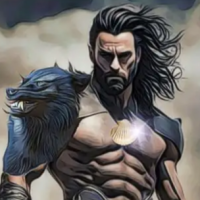
He wore no heraldry, no banner marked his path, only crimson plate dulled by travel and battle. He was known simply as Bucheron, a knight not of church or court, but of the Red Knight, goddess of strategy, foresight, and battlefield doctrine.
Once, he had served as as the implement of the tacticians during the Holy Wars of Sembia. Respected, decorated, feared. But faith in command had led him to refuse a general’s suicidal order, and for that, he had been cast out. Not broken, only set loose upon the board.
Bucheron now walked the realms not as a crusader, but as a Wandering Templar, guided not by visions or prophecy, but by calculation and the endless pursuit of the perfect move in the great game of conflict.
Where others prayed for miracles, Bucheron studied the terrain. Where others begged the gods for strength, he asked: what can be sacrificed, and what must endure? The Red Knight does not reward faith. She rewards precision.
Gather ‘round, good folk, and hear
A tale to scorch the very ear,
Of knight in red, of fire and stone,
Of hearts unyielding, flesh and bone.From far Cormyr's fields to Anauroch sands,
Through battlefields and shattered lands,
There strode a man in crimson steel
Sir Bucheron, of the Wandering Seal.A Templar sworn to the Red Lady’s just name,
But cast from cloister, not from flame.
With oaths still clenched in calloused hand,
He roamed as justice's burning brand.The Companions
No great endeavor succeeds alone. Even the finest gambit needs its pieces.
Bucheron gathered two.
Chamomile, a halfling whose cheerful name belied her lethality, joined him first. Raised among Hinfolk caravans in and beyond Narfell's small border kingdoms. She was quick with her wit, quicker with her aim, and perhaps the only person who could calculate trajectory as fast as Bucheron himself.
The second was Lia, a Tiefling duelist, schooled in the bloody calculus of the alleys of her distant home. With twin kukri-knives that they say were forged in the Nine Hells, and of unmatched quality, and reflexes honed by a life of betrayal, Lia understood that survival is its own kind of strategy. Her loyalty was not born of honor, but of understanding: Bucheron played the long game, and in his presence, even chaos found its place.
Together, they descended into the wound in the earth.
But no knight walks the dark alone
At his side two shadows shone:
Chamomile, halfling brave and keen,
With shortbow strung and magic sheen.
A wand she bore, of missiles bright,
A star in every darkest fight.And Lia, Tiefling born of dusk,
With kukri-blades and silver tusk
Piercing through the foes’ deceit,
Her laughter twinned with death's heartbeat.The Descent
The fiery crater was no longer a rocky part of the mountain; it was a wound, raw and bleeding molten fire. The deeper they went, the more the world screamed. The ancient forges beneath had cracked open, their wards shattered and their runes flickering like dying memories.
They found the remnants of the ritual wardens scattered like bones. The Iron Colossus had claimed the forge as its lair, its frame glowing with heat drawn from the core itself. Steam hissed. The ground trembled. The Ember-Heart pulsed within its chest like a second sun.
There was no warning. No challenge. No parley.
It attacked.
Now deep within the molten sound,
Where lava runs like royal gown,
An ancient terror rose once more
The Iron Colossus, forged in war.Built by hands long turned to ash,
A titan clad in molten sash.
With eyes aglow and steps that broke
The mountain’s bones in every stroke.Its heart a gem of burning coal,
A fire-born shard of the world’s soul.
The Ember-Heart, so legends say,
Could wake the gods or burn them away.The priests of Grumbar wept and prayed,
As tremors cracked the land they swayed.
Till came the Red Knight and his two,
With steel, spell, and daggers true.The Battle
There is no such thing as a fair fight.
The Red Knight teaches that no battle is won by strength alone, but by position, by understanding, and by sacrifice.
Chamomile moved like a whisper, loosing arrows that sought seams between plates. When they failed, she drew her wand, sending volleys of magical force into the Colossus’s joints, forcing it to pivot, to expose, to err.
Lia danced along collapsing stone, carving through control glyphs that were etched into the Colossus’s calves and shoulders. Every strike was itself part of a pattern, a destabilization of stance, the removal of the titan's options.
And Bucheron, calm amid the inferno, did not strike until the board was ready.
He studied the Colossus as a general studies a map: noting flaws, rhythm, tempo. When the moment came, he advanced - not with fury, but with certainty.
His sword, Vowrender, held defiantly before him with intent. It did not seek to destroy, but to disable. Bucheron scaled the metal monster and drove his blade into the Colossus’s inner shoulder, turning the entire right side inert. But the creature retaliated, venting heat that turned stone to slag and sent the companions reeling.
It would of course regenerate. The Ember-Heart would not be stopped from without.
There was only one move left.
Through tunnels choked with smoke and slag,
Past runes that flickered, wards that sag,
They found the beast in cavern wide,
Where magma kissed its iron hide."Hold fast!" cried Chamomile, then loosed
A volley swift, her arrows used
To find the seams 'twixt plates of black
The Colossus roared and struck them back.Its hand, a hammer made of chain,
Brought fire down like holy rain.
But Lia danced, with impish grace
Carving glyphs on the titan’s face.Twin blades flashed, one-two, one-two,
While shrieking missiles split the view.
The wand sang out, six bolts of light,
And struck the beast in mid-plight.The Sacrifice
The Red Knight’s greatest lesson is this: every winning strategy requires the right sacrifice.
Bucheron broke from formation. Not recklessly, but intentionally, a decoy move. He ordered Chamomile to target the knee joints, Lia to sever a cooling coil near the neck. They obeyed without hesitation. Then he ran straight toward the thing.
Through steam and debris, through fire that peeled crimson paint from his steel plate and seared the very air, Bucheron leapt onto the Colossus and climbed once more. He drove Vowrender into its chest plate, prying it open with brutal ruthlessness.
And then he reached into the furnace of its cavernous breast. His gauntlet burnt, and cracked. His skin blistered beneath his armor. But his grip found the core - the Ember-Heart, and he wrenched it from the walking factory.
The machine shuddered, world convulsed.
With a final lurch, the Colossus locked, seized, and collapsed, its limbs fused by the sudden absence of power. The Ember-Heart pulsed violently and it sparked in Bucheron’s hands… and did not die. Some say, not ever.
Then came the knight, with voice like bells,
His sword a hymn, his wrath a spell.
No shield he bore, just tactics bare,
And Lady Strategy's judgment filled the air.With a cry that split the smoky dome,
He leapt - yes, leapt! - into the chrome.
His blade plunged deep, then deeper still,
Through armored breast and iron will.The Colossus staggered, tried to rise,
But met the fire in Bucheron’s eyes.
He reached inside, through heat and pain,
And wrenched the heart from its domain.The mountain screamed. The forge-light died.
The Colossus fell, and would not rise.Legacy
They emerged from the mountain. Blackened. Limping. Changed.
The Ember-Heart had not been destroyed. Legend tells that it had fused to Bucheron’s armor, embedded in the chestplate like a living scar. Its heat did not consume him, but it burned through him as a constant reminder of what had been sacrificed, and what remained unfinished.
Chamomile we're told left for the west, claiming she'd earned a quiet life. Though her name would later surface in the bakers' duels of Halruaa.
Lia vanished into myth, as shadows so often do. Rumor places her blades in Thay, then Sossal, then nowhere at all.
And Bucheron?
He walks still.
A crimson figure with a slow gait and a burning heart, appearing where war is brewing and tactics are failing. He no longer speaks of victory. Only of the board. He is the Red Knight’s piece, forever moving, forever planning, and now, forever burning.
For strategy remembers.
And so does fire.
Three figures stood where none should live
And from the heart, a pulsing give:
The Ember-Heart, so hot, so red,
Yet tamed by the knight by just a thread.They left the mountain, marked by flame,
And everywhere the bards would name:
The Halfling Spark, The Daggered Dusk,
And Crimson Vow, in armor husk.Some say the heart still burns today,
Set in Bucheron’s crimson plate,
A furnace for his holy might
A light against the longest night.So drink to them, the truest few,
Whose courage forged the world anew.
And should you wander mountain’s base,
Remember well the titan’s face
And how it fell to mortal will,
With fire, and friends, and fury still...
-
Long before the weight of a sword ever touched his calloused hands, before he wandered the realm under the Red Knight’s sigil, Boucheron was simply a stable groom’s son in the quiet village of Perry's Hollow in the abbey by the Wyvernwater. Or so the story goes...
Most days, he mucked stalls, brushed the squire’s ponies, and learned to dodge kicks from Lady Merian's ill-tempered mule. The rhythm of the stables was simple - safe, even. But it never stirred his heart like the morning drills in the courtyard did. From a crack in the stable wall, Ruhin would watch the knights train, mimicking their movements with a pitchfork, his eyes gleaming with dreams too bold for a boy born in the straw.
But the memory that stayed with him the longest was not a battle or a sword, rather, it was the apples.
One crisp autumn morning, Boucheron and his friend Tib, the baker’s youngest, devised a plan as daring as any siege. Old Dame Cedra’s orchard stood just behind the chapel grounds, her trees heavy with blushing fruit, guarded only by a fence more symbolic than secure.
“We’ll be quick,” Tib whispered, eyes shining.
They weren’t quick.
Cedra caught them halfway over the fence, Ruhin with his tunic snagged and Tib dangling upside-down like a half-wrapped gift.
The punishment? A week hauling firewood and sweeping the chapel steps under the eye of Brother Garrick, one of Tyr's quiet devotees. While Tib groaned and dragged his heels, Boucheron listened, listened to tales of honor, sacrifice, and the strength it took not to swing a sword, but to wield it with purpose.
One evening, as Boucheron lingered after sweeping, Brother Garrick set down his quill and said, “Not all defenders wear steel. But those who do must first carry the weight of choice. Do you seek the blade for its glory, or to protect?”
Ruhin didn’t have an answer then. But the question stayed with him like a seed pressed into soil.
Years later, as a wandering Templar, now sworn to the Red Knight, Boucheron would travel through war-torn hamlets and cities choked with fear, a quiet strength in crimson and silver. But when he passed apple orchards, he smiled.
Not for the mischief, but for the moment a boy, fated to be a stable hand, caught his first glimpse of the man he might become.